
Our Sectors
Learn how we’re using 3D scanning in the large range of sectors and applications
3D scanning and reverse engineering is useful in many sectors large and small. From inspection to documentation, 3D scanning can help reduce development time, recreate obsolete components or documentation historic artefacts..
Automotive & Motorsport
For custom performance parts or the reproduction of obsolete components, 3D scanning is vital in the Automotive and Motorsport industries.
From cars to motorcycles and bicycles to trucks, using 3D scanning for after market parts, customisation, tuning or restoration is a perfect use case. Efficiently create duplicate reference data of existing parts or scan an area for fitment or space constraints.

Applications
- Production Quality Inspection
- After market upgrades
- Bodywork modifications
- Custom fit exhausts
- Vehicle roll cage
- Vehicle-use conversion
- EV conversion
- Fleet conversion
Shorten Development Cycles
3D scanning quickly creates reference data that can be worked from
Capture complex, flowing surfaces
Manually measuring compound surfaces is difficult and prone to errors
Replicate out-of-production parts
Paired with 3D printing, 3D scanning can help replicate parts that are no longer available
Generate data that fits perfectly
3D scanning digitally replicates reality perfectly and this is crucial for well-fitting parts
Medical & Healthcare
Medical professionals are using 3D scanning to ensure human anatomies are captured and cared for with efficiency and precision.
Being able to scan the human anatomy provides an unrivalled insight into patient care, efficiency and comfort. The healthcare industry and particularly prosthetics and orthotics can benefit greatly from 3D scanning technology.

Applications
- Infant and adult cranial scanning
- Plastic surgery visualisation
- Prosthetic development & socket design
- Post-surgery garments
- Orthotic insoles
Scan patient anatomy perfectly
No need to guess or estimate sizes. Create an accurate representation of a limb, mould or cast
Right first time fit
Making multiple iterations of an item is not efficient or even viable all the time
Portable & suitable for home use
Our scanners can be set up anywhere and don't require special lights or environments
Non-contact with scanning subject
The very act of measuring a soft, organic mass can change its size - not with 3D scanning
Industrial Manufacturing
Ensuring production continuity is imperative and 3D scanning is poised to improve, document or replicate parts and components.
Scanning and reproducing broken parts or improving the design is an attractive use case for scanning. Whether it’s for maintenance, repairs or operational requirements, we’ve got you covered.

Applications
- Replace a broken mounting bracket with a 3D printed part
- A preventative measure of having a 3D model of a vital component
- Create spare parts of consumable items on-demand
- Reverse engineering of parts to create a metal sand cast
- Design safety guards for dangerous, moving equipment or robots
No need for original part data or designs
Obsolete parts and designs are a real problem when your supplier no longer stocks a part
Improve upon existing designs
The current part may not be performing as well as it could with some tweaks
Create moulds to replicate parts
Use the current part to create a mould or form and mould, cast or press raw material into shape
Assess wear and tear of components and tools
3D scanning can be used as a preventative maintenance tool to highlight wear or damage
Aerospace & Defence
3D scanning is being used in aerospace and defence applications for inspection, modelling and measurement.
3D scanning is vital to industries like general aviation, vintage restoration, and defence manufacturing. Precise 3D scans inform decisions, streamline processes, and enhance safety making for a stable, efficient development.

Applications
- Reverse engineering obsolete OEM parts
- Aerodynamic CFD and FEA analysis
- Damage assessment from hail, bird strikes or wear
- Ensuring fitment within an existing assembly
- Ensure straightness or true-to-design of surfaces
Shorten Development Cycles
When there are no replacements, suppliers or CAD, create new data from the old
Blade surface inspection
The smallest inaccuracies on turbine or propeller blades can create several concerning behaviours
Surface damage assessment
Damage is not always visible and it can be very difficult to measure the true extent of damage
Assembly spatial analysis
Knowing a new part, a redesigned housing or fresh ducting will fit in the assembly provides peace of mind
Power Generation
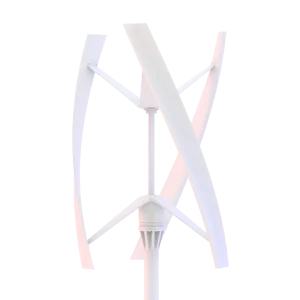
The energy sector is using 3D scanning to inspect, analyse or build spatial models to enable efficient design cycles.
Energy generation is at the pinnacle of small and large-scale engineering. 3D scanning is primed to assist in the inspection, creation and assessment of components and assemblies.
Applications
- Analyse the extent of surface damage on a wind turbine blade
- Review tolerance and wear of a planetary gear set
- Create reference mounting locations of an existing system
- Assessing current design in a CFD simulation using scan data
- Ensure new turbine housing will fit within an assembly
Create data for CFD analysis without CAD
Inheriting operating assemblies without CAD is commonplace - but how do you assess its efficiency?
Inspecting surfaces for damage
Bird strikes, foreign bodies or transport can damage parts in ways not always visible
Analyse the wear of moving components
Bearing faces and moving assemblies can, over time become worn and it's difficult to assess the extent
Arrangement of an assembly
Creating a new part to fit within an assembly is difficult without the full assembly in CAD
Consumer Products
Product and packaging designers use 3D scanning to better understand products and to enhance the development process.
3D scanning can be beneficial in various stages of product development, including creating reference data, simulation, and analysis.
When creating packaging, often there isn't a solid CAD model, so 3D scanning can provide a digital reference to build off of.

Applications
- Reverse engineer competitor products
- Create reference models to build from
- Digitalise hand-crafted prototypes
- Scan soft items such as fabric or food
- Create test rigs, jigs & fixtures for production lines
- FEA Stress simulation of a design
- CFD analysis of a part
Shorten product development stages
Capture the surface details of clay or the fine edges of foam to speed up development
Enhance CAD outcomes
3D scanning allows you to have a solid foundation of reference data to work from
Quickly develop, recreate or document prototypes
Save time, energy and storage space by digitally storing prototypes, test rigs or trial parts
Assess competitor products or designs
Use scanned data to analyse what your competitors are doing well or how you could improve them
Augmented & Virtual Reality (AR & VR)
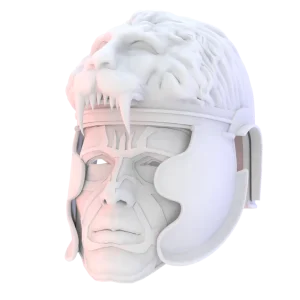
AR & VR studios and creatives are using 3D scanning to create a familiar link to reality users crave in an increasingly digital world.
Taking the real, physical world into the digital realms unlocks the previously unseen potential of the digital world - a true link to reality. Scan real-world items and use them across exciting digital media platforms, from websites to games and safety apps to digital catalogues.
Applications
- Real-world elements in VR
- Instructions for maintenance manuals
- Creating a series of NFTs of a football team's boots
- Document SFX makeup or costumes for future reference
- Augmented reality for furniture for size and colour review
A digital link to reality
Create digital versions of real-life items to bring the real world into the web, games or VR experiences
Digital representations of real-world items
Bring real-world items such as furniture, branded goods or new designs into AR experiences
Enhance, customise or manipulate digital data
Use the digital data to quickly change colourways or experiment with design variations
View, resize and move data in the digital world
Scale, reshape or explore real-world items like never before and share them worldwide
Arts, Culture & Heritage
Artists and museums around the world utilise 3D scanning to digitise, store and reference fragile art pieces and artefacts.
Being able to preserve historical or cultural objects and present them in a way that can be accessed anytime, anywhere is invaluable. Capture form, colour and scale with our 3D scanning expertise.
Applications
- Digital copies of fragile or degrading artefacts
- Share data of priceless objects across the world risk-free
- Present a series of historical items on a website
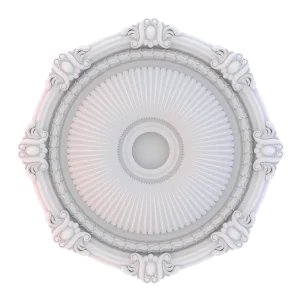
- Restore a portion of an intricate ornamental picture frame
Digitally preserve fragile objects
Not only is 3D scanning non-contact, once you have the scan data the objects can be archived
Archive data in an easy-to-process way
Once scanned, the data can be organised and the objects stored for the long term to reduce risk
Inspect, analyse or observe artefacts
Measuring or closely inspecting important objects manually can be a risky task
Scale and manipulate digital models
Scaling up and 3D printing art or artefacts paves the way for enhanced experiences